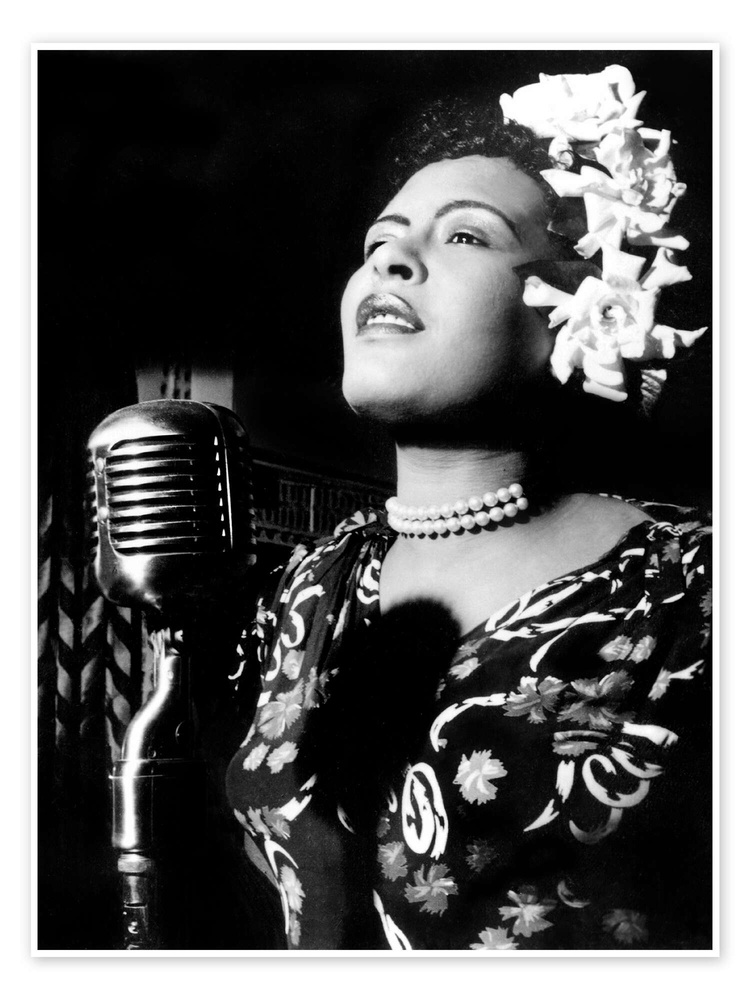
Billie Holiday
Biography
Billie Holiday, born Eleanora Fagan on April 7, 1915, in Philadelphia, Pennsylvania, was an iconic American jazz and blues singer whose emotive voice and unique phrasing left an indelible mark on music history. Raised primarily in Baltimore and later in Harlem, New York, Holiday endured a difficult childhood marked by poverty and abuse. Despite these hardships, she emerged as a powerful musical talent in the 1930s, developing a deeply personal style that combined elements of jazz, blues, and swing. Her ability to convey profound emotion and vulnerability in her performances earned her widespread acclaim. Throughout her career, Holiday faced significant racial discrimination and personal struggles, including battles with addiction and legal troubles. Despite this, she used her platform to address social issues, most notably with her haunting recording of "Strange Fruit," a protest against the lynching of African Americans in the South. This song became a powerful symbol of the civil rights movement and showcased her courage in confronting racial injustice. Holiday's influence extended beyond her lifetime, shaping generations of musicians and vocalists. Her collaborations with jazz greats such as Lester Young and Count Basie further cemented her place in the pantheon of American music. Despite a life marked by adversity, Billie Holiday's artistry, emotional depth, and activism have left a lasting legacy, making her one of the most revered figures in jazz history.
Key Achievements
- 1
Popularized the song "Strange Fruit," a landmark protest against racial violence
- 2
Developed a unique vocal style characterized by emotive phrasing and timing
- 3
Collaborated with prominent jazz musicians like Lester Young and Artie Shaw
- 4
Inducted posthumously into the Grammy Hall of Fame for multiple recordings
- 5
Recognized as one of the greatest jazz singers of all time
Birth Date
April 7, 1915
Death Date
July 17, 1959
Source / Reference
Biographies such as "Lady Sings the Blues" by Billie Holiday and William Dufty, Smithsonian Institution archives, Jazz history texts, Library of Congress recordings