The Overlooked Arrests of Black Women During the Montgomery Bus Boycott on February 22, 1956
Original Creator/Source
Black women activists and protesters involved in the Montgomery Bus Boycott
Wrongly Credited To
Predominantly male leadership and narratives centering on figures like Dr. Martin Luther King Jr.
Time Period
1950s
Region
Americas
The Full Story
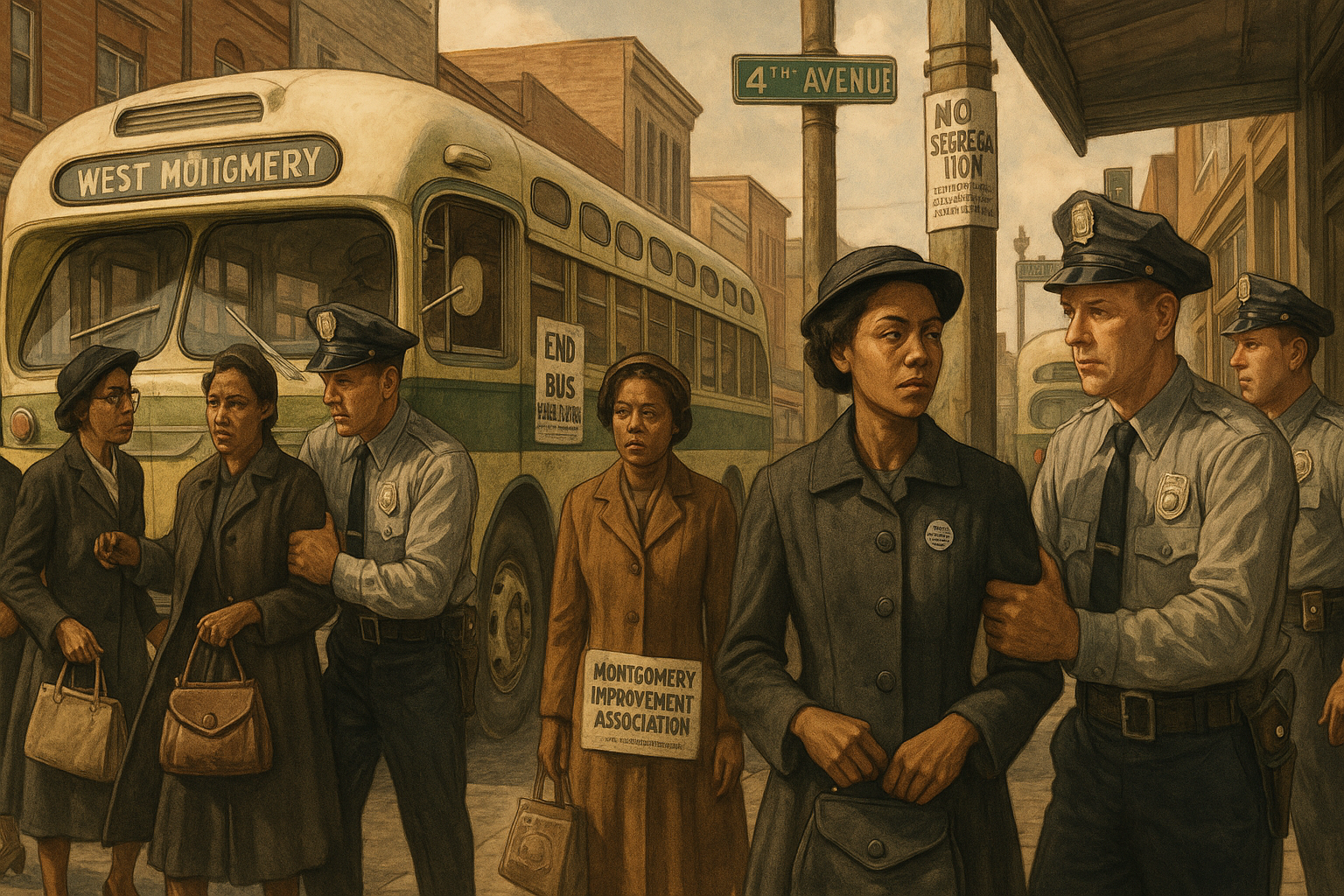
While the Montgomery Bus Boycott is widely celebrated as a pivotal moment in the American Civil Rights Movement, the detailed accounts of arrests during this period, especially on February 22, 1956, reveal a significant erasure of Black women's direct involvement and sacrifices. On that date, several Black women protesters were arrested for defying segregation laws on Montgomery buses, yet historical narratives have predominantly highlighted male leaders, overshadowing the courageous acts of these women. Their arrests were vital acts of civil disobedience that maintained momentum for the boycott and exemplified grassroots resistance. This erasure reflects a broader pattern in civil rights historiography where the contributions and struggles of Black women are minimized or omitted, leading to a skewed understanding of the movement's dynamics. Black women like Jo Ann Robinson and the Women's Political Council laid the organizational groundwork for the boycott, yet their arrests and personal risks during key protest moments like February 22 receive little attention. Recognizing their role corrects historical imbalances and honors the full scope of leadership and bravery that fueled the struggle against segregation. Understanding these overlooked arrests reshapes how the Montgomery Bus Boycott is remembered and teaches the importance of inclusive historical narratives. It highlights the intersection of race and gender in activism and challenges dominant stories that prioritize male leadership. This recognition empowers present and future generations by showcasing the collective and diverse nature of social justice movements, emphasizing that change is driven by many voices and sacrifices, not just the most famous figures.
Evidence & Sources
- Clayborne Carson, 'In Struggle: SNCC and the Black Awakening of the 1960s' – discusses grassroots activism and roles of Black women.
- Jo Ann Robinson's personal writings and archives at the Alabama Department of Archives and History.
- 'Daybreak of Freedom: The Montgomery Bus Boycott' by Stewart Burns – provides detailed accounts of protest activities and arrests.
- Oral histories from the Southern Oral History Program highlighting women's experiences during the boycott.
Additional Reference
Montgomery Advertiser archives, February 1956 arrest records, and Women's Political Council documentation