The Overlooked Collective Leadership at the First SCLC Meeting, February 14, 1957
Original Creator/Source
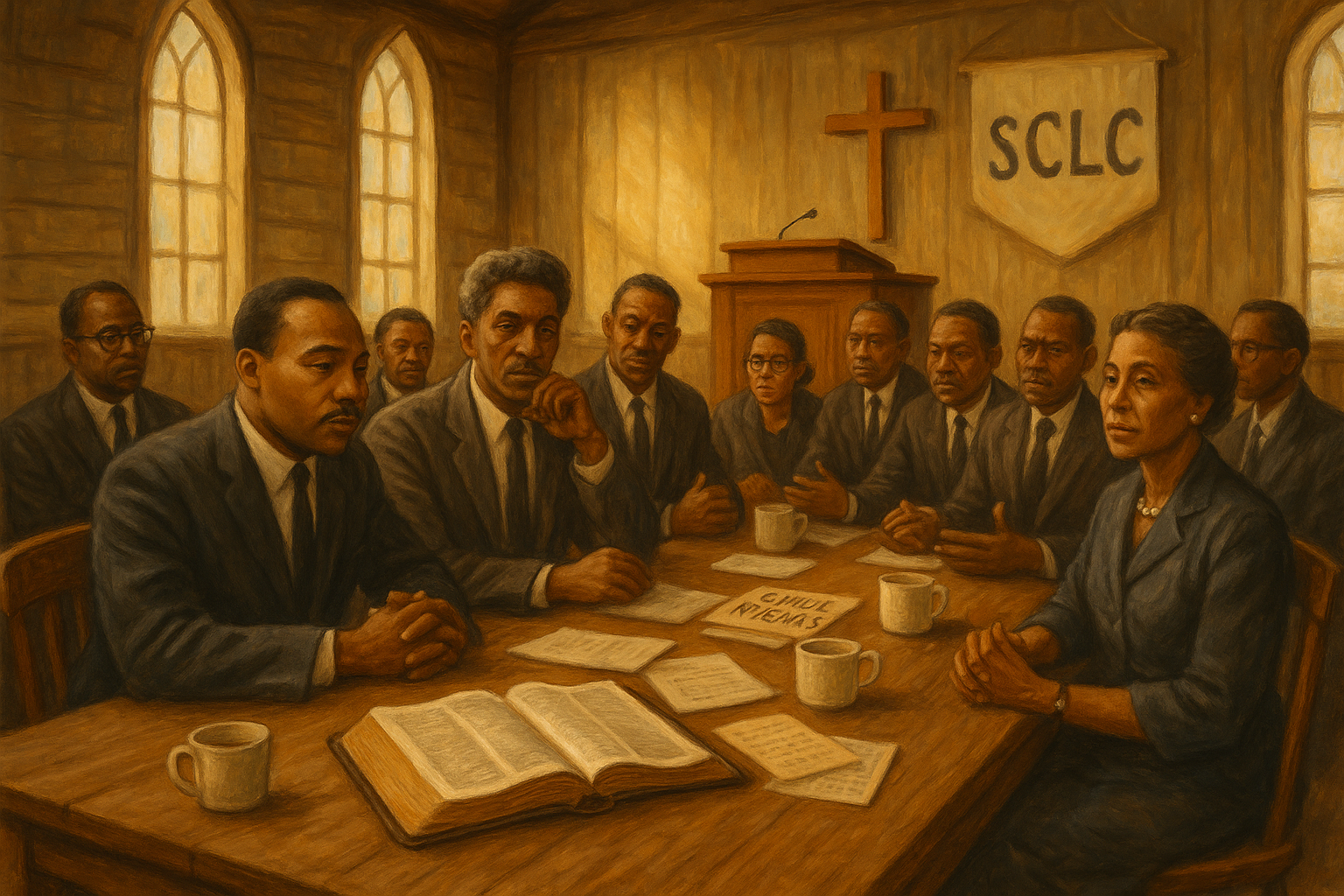
The Southern Christian Leadership Conference founding members, including Bayard Rustin, Ella Baker, and other lesser-known Black civil rights leaders
Wrongly Credited To
Dr. Martin Luther King Jr. as sole founder and primary leader
Time Period
1950s
Region
Americas
The Full Story
The Southern Christian Leadership Conference (SCLC), officially founded on February 14, 1957, is widely recognized as a pivotal organization in the American Civil Rights Movement. Popular historical narratives often credit Dr. Martin Luther King Jr. as the singular founder and primary driving force behind the SCLC. However, this narrative obscures the critical roles played by a broader coalition of Black leaders whose contributions have been marginalized or erased. Bayard Rustin, a key organizer and strategist, was instrumental in shaping the SCLC's nonviolent philosophy and organizing its initial meetings, yet his involvement was downplayed due to his sexuality and political beliefs. Similarly, Ella Baker, a veteran organizer from the NAACP and the Southern Negro Youth Congress, was deeply involved in grassroots mobilization and fostering democratic leadership within the SCLC, though she receives little public recognition in mainstream histories. The erasure of these and other Black leaders from the story of the SCLC's founding reflects a broader pattern of simplifying complex collective efforts into singular leadership narratives, often centering on charismatic male figures. This simplification not only distorts the historical record but also diminishes the contributions of women, LGBTQ+ activists, and other organizers whose grassroots work was essential. Recognizing the collective nature of the SCLC's founding challenges dominant historiography and honors the diverse leadership that powered the Civil Rights Movement. It also provides a more accurate model of social movement leadership that emphasizes collaboration and inclusivity. Understanding this hidden history matters because it provides a fuller, richer account of Black activism and the struggles for racial justice. It also corrects the record to acknowledge the contributions of marginalized leaders whose work was critical to the successes of the movement but has been overshadowed. This recognition can inspire contemporary activism by highlighting the power of collective leadership and intersectional contributions in social justice causes.
Evidence & Sources
- David J. Garrow, "Bearing the Cross: Martin Luther King, Jr., and the Southern Christian Leadership Conference"
- Barbara Ransby, "Ella Baker and the Black Freedom Movement: A Radical Democratic Vision"
- Stephanie Shonekan, "Bayard Rustin: Behind the Scenes of the Civil Rights Movement"
Additional Reference
Minutes and records from the first SCLC meeting, February 14, 1957, archived at the Martin Luther King Jr. Center for Nonviolent Social Change