The Overlooked Role of Black Women in Leading the Selma to Montgomery March
Original Creator/Source
Black women activists and organizers of the Southern Christian Leadership Conference (SCLC) and local grassroots groups
Wrongly Credited To
Public narratives primarily credit male leaders like Dr. Martin Luther King Jr. and John Lewis
Time Period
1965
Region
Americas
The Full Story
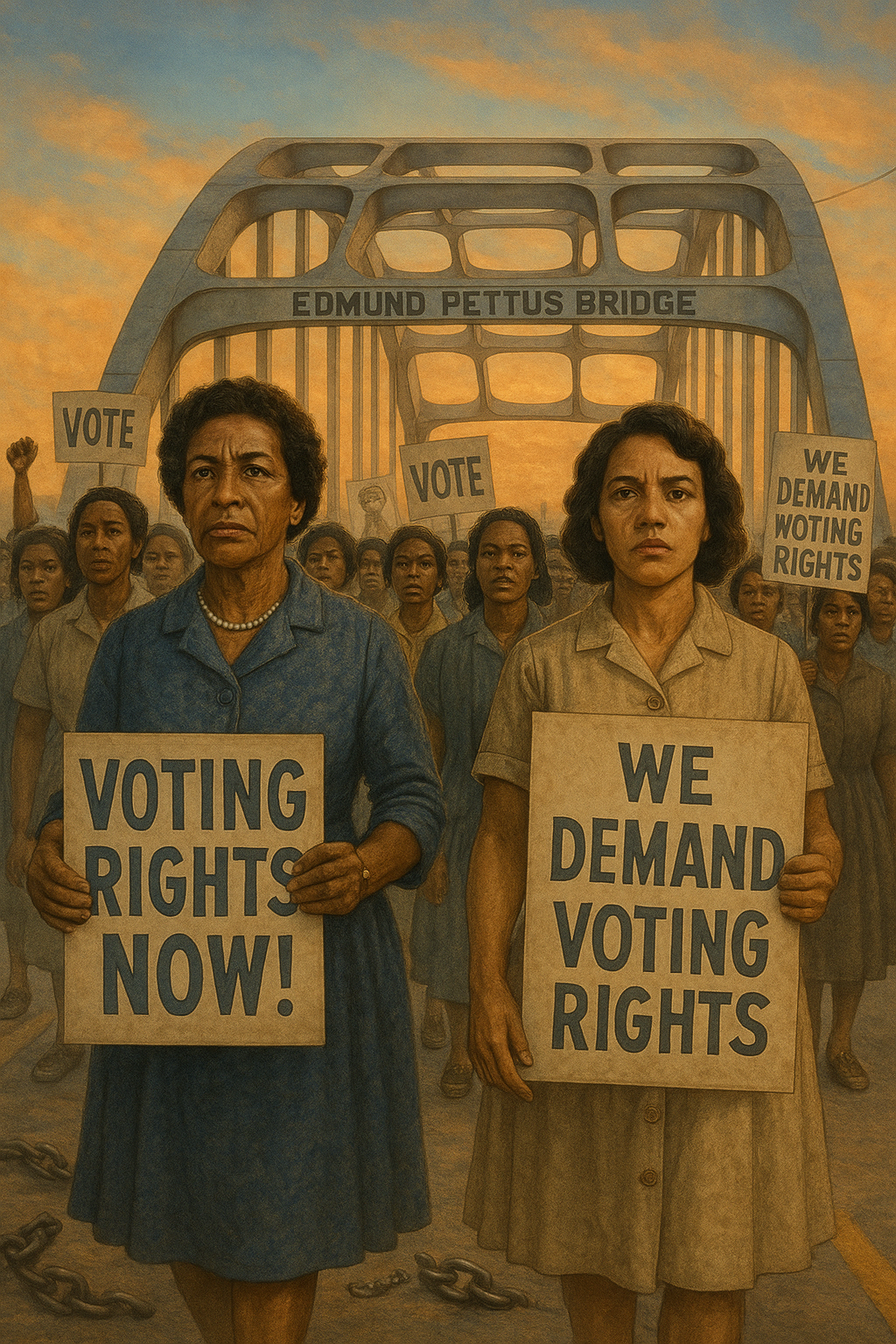
The Selma to Montgomery March, culminating on March 21, 1965, is widely remembered as a pivotal moment in the U.S. civil rights movement, often centered around male figures such as Dr. Martin Luther King Jr. and Congressman John Lewis. However, Black women were instrumental both in organizing the march and sustaining the movement, yet their contributions remain underrecognized in mainstream historical accounts. Women such as Amelia Boynton Robinson, Diane Nash, and Ella Baker played critical roles in mobilizing local communities, strategizing nonviolent resistance, and maintaining the spirit and discipline required for the march’s success. Amelia Boynton Robinson, in particular, was beaten and severely injured during 'Bloody Sunday' on March 7, 1965, symbolizing the brutal repression faced by Black women activists on the front lines. These women’s leadership extended beyond the march itself; they helped build the infrastructure of the voting rights campaign and nurtured grassroots activism in Selma and surrounding areas. Their organizational skills, courage, and resilience were key to the campaign’s effectiveness, yet early media coverage and later historical narratives often marginalized their presence in favor of iconic male leaders. This erasure reflects broader patterns of gender and racial bias within historical documentation and public memory, where Black women’s leadership has frequently been overlooked. Recognizing the centrality of Black women in the Selma to Montgomery March is crucial not only to ensure historical accuracy but also to honor the intersectional struggles they faced—combating both racial and gender oppression. Their stories provide a more complete understanding of the civil rights movement’s dynamics and inspire contemporary movements that seek to amplify the voices of marginalized leaders. Addressing this erasure helps correct historical imbalances and affirms the diverse coalition that achieved monumental change in American democracy.
Evidence & Sources
- Taylor Branch, 'Parting the Waters: America in the King Years, 1954-63'
- Diane Nash, oral histories and interviews archived at the Smithsonian National Museum of African American History and Culture
- Amelia Boynton Robinson's memoirs and testimonies
Additional Reference
Records and archives from the Southern Christian Leadership Conference (SCLC), Library of Congress civil rights collections