The Overlooked Role of Black Women in Nelson Mandela's Release from Prison
Original Creator/Source
Black South African women activists and grassroots communities
Wrongly Credited To
Primarily Nelson Mandela and male ANC leadership
Time Period
Late 20th Century (1980s–1990)
Region
Africa
The Full Story
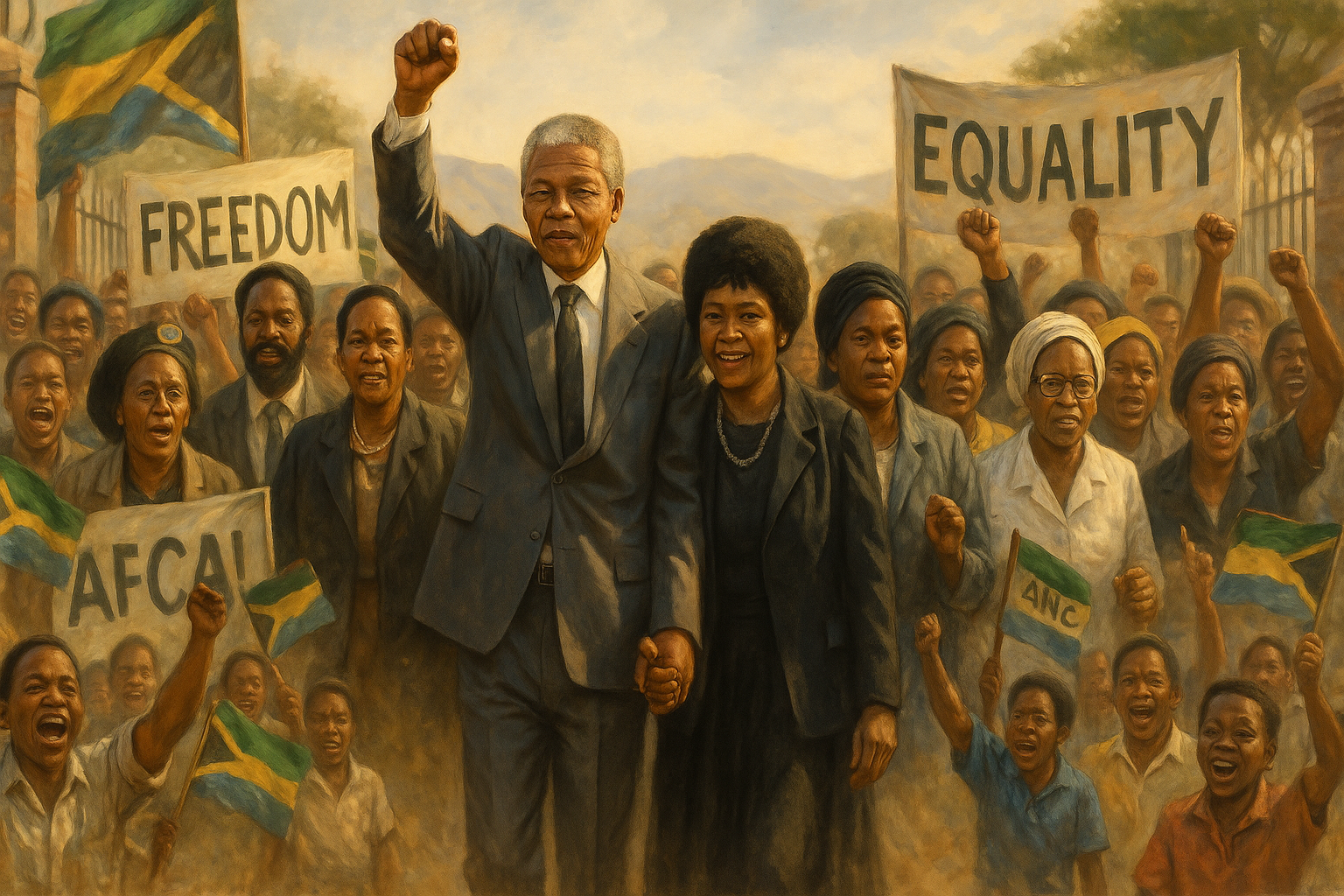
Nelson Mandela's release from prison on February 11, 1990, is globally recognized as a pivotal moment signaling the beginning of the end of apartheid in South Africa. However, the dominant narrative largely centers on Mandela himself and the male leadership of the African National Congress (ANC), often sidelining the critical contributions of Black South African women activists and grassroots movements. Women such as Winnie Madikizela-Mandela, Albertina Sisulu, and countless unnamed activists sustained relentless pressure through protests, international advocacy, and community organizing during Mandela’s 27 years of imprisonment. Their tireless efforts kept the anti-apartheid struggle alive, maintained morale among prisoners’ families, and mobilized global solidarity, which was instrumental in creating the political conditions that led to Mandela's release. The erasure of women's roles in this historical moment stems from patriarchal narratives that prioritize male leaders while minimizing the intersectional and collective nature of liberation movements. This marginalization diminishes the understanding of how deeply intertwined social resistance was with women's activism, which included leading boycotts, organizing underground networks, and challenging both racial and gender oppression simultaneously. Recognizing these contributions is crucial to understanding the full scope of the anti-apartheid struggle and dismantling the myth of singular, male-centered leadership. Acknowledging the overlooked roles of Black women in Mandela’s release also reframes the history of South Africa’s liberation to include intersectional feminist perspectives, highlighting the essential contributions of marginalized groups. This recognition enriches global historical consciousness by demonstrating that freedom struggles are collective endeavors sustained by diverse actors, whose stories deserve equal prominence. It challenges reductive historical narratives and promotes a more inclusive retelling of past events that honors all contributors to justice and equality.
Evidence & Sources
- Lindsey J. Stewart, 'Women and the Anti-Apartheid Struggle in South Africa,' Journal of Southern African Studies, 2018.
- Cheryl Walker, 'Women and Resistance in South Africa,' South African History Archive.
- Primary interviews and archival records from the Albertina Sisulu Foundation.
Additional Reference
Official South African History Archive (SAHA) and ANC Women’s League records