The Sharpeville Massacre: A Silenced Catalyst of Global Anti-Apartheid Resistance
Original Creator/Source
The Black South African protesters and the Pan Africanist Congress (PAC)
Wrongly Credited To
Apartheid regime narratives and mainstream Western media framing
Time Period
1960s
Region
Africa
The Full Story
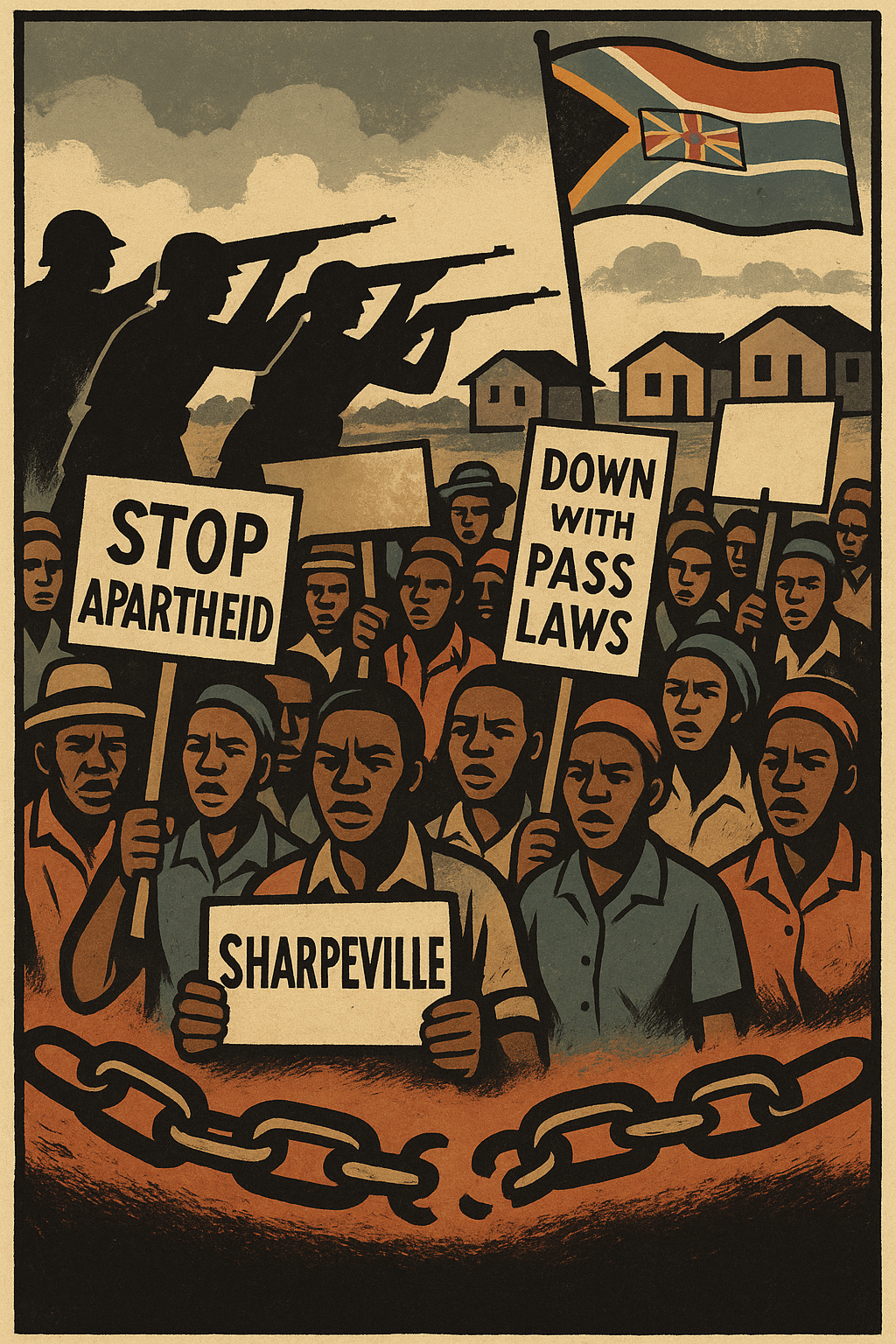
The Sharpeville Massacre, which occurred on March 21, 1960, in the township of Sharpeville, South Africa, stands as a pivotal yet often underrepresented event in the struggle against apartheid. On that day, thousands of Black South Africans, organized primarily by the Pan Africanist Congress (PAC), gathered to peacefully protest the oppressive pass laws that severely restricted their movement and freedom. The protest aimed to draw international attention to the brutal realities of apartheid, yet the South African police responded with disproportionate violence, opening fire on the crowd and killing 69 protesters, including women and children. Despite the massacre’s profound impact in galvanizing both domestic resistance and international condemnation of apartheid, early narratives were heavily skewed by the apartheid regime and sympathetic Western media, which framed the event as a riot or justified police action. This framing served to obscure the agency and bravery of the predominantly Black protesters who risked their lives in a nonviolent demonstration against systemic racial oppression. The massacre was a catalyst for the international anti-apartheid movement, but the erasure of the protesters’ courage and the PAC’s leadership in historical recounting has contributed to a limited understanding of the event’s true significance. Recognizing the Sharpeville Massacre as a critical moment in Black resistance history is essential because it highlights the role of Black South Africans as active agents of change rather than passive victims. It also challenges the sanitized versions of history disseminated by apartheid and its sympathizers. Elevating this hidden history not only honors those who sacrificed but also provides a fuller, more accurate picture of the global struggle for racial justice and human rights.
Evidence & Sources
- Human Rights Watch, 'Sharpeville Massacre: The Beginning of the End of Apartheid'
- South African History Archive (SAHA) documentation on PAC and Sharpeville
- United Nations General Assembly Resolution 1761 (1962) condemning apartheid following Sharpeville
Additional Reference
South African History Archive (SAHA), 'Sharpeville Massacre 1960' collection